Who is this for?
Anyone who works with music therapeutically
No formal music training required. This course is for practitioners, facilitators and creatives who want to use music in therapeutic settings with more confidence, intention and impact.
Therapists and guides
Working in clinical, therapeutic or psychedelic-assisted contexts where music plays an active role in the session.
Body and mind practitioners
Using music to hold space, regulate nervous systems or deepen experiential practice.
Musicians and producers
Deepening your relationship with music and how it moves people, whether you perform, produce or curate.
Students and researchers
Exploring the intersection of music, neuroscience, culture and human experience through academic or personal inquiry.
Course testimonials
What our students say
Average course rating from survey respondents
Of survey respondents said the course met or exceeded their expectations
Of survey respondents are highly likely to recommend to a colleague or peer
Meet your instructor
Dr Mendel Kaelen, PhD
Neuroscientist, musician and course creator.
.jpg)
Dr Mendel Kaelen is internationally recognised for pioneering research on the therapeutic power of music. In this course, he shares the essence of more than 15 years of research and practice.
He completed his PhD in neuroscience at Imperial College London in 2017, specialising in the role of music in psychedelic therapy and has co-authored more than 50 academic papers. His work integrates studies begun in 2007 with mentors across psychotherapy, psychoanalysis, anthropology, phenomenology, and neuroscience.
His platform, Wavepaths, has supported over 50,000 clinical sessions. He has guided hundreds of group and individual sessions, and curated therapeutic playlists that have reached more than 100,000 listeners worldwide.
Mendel teaches with humility, curiosity, and remarkable depth. Rather than offering rigid methods, he creates a space where participants rediscover music through direct experience. That approach allows each person to reconnect with their own musical intuition and trust the unfolding of the moment.
TK, Practitioner of Music-ing and Relational Sound, Co-Founder KTTK Love
Step inside the course
A unified understanding of therapeutic music
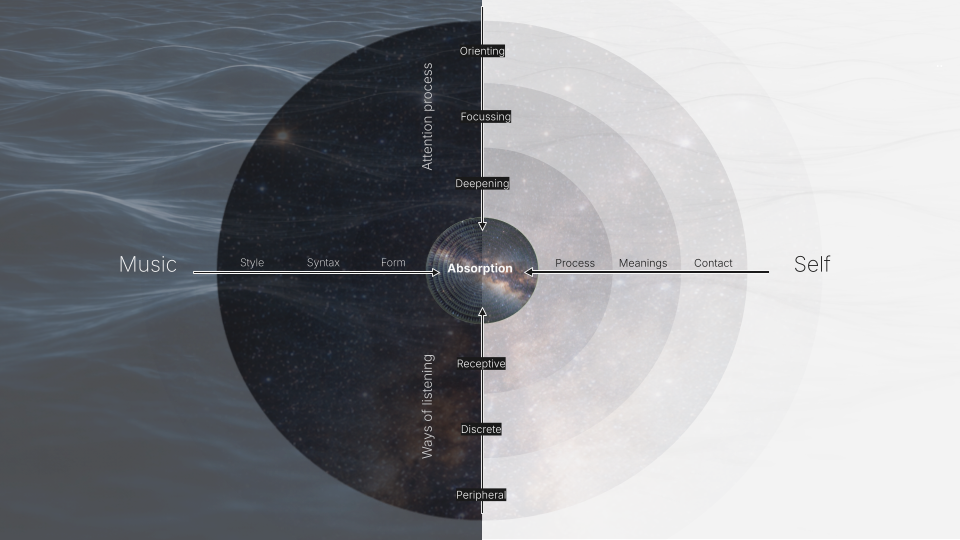
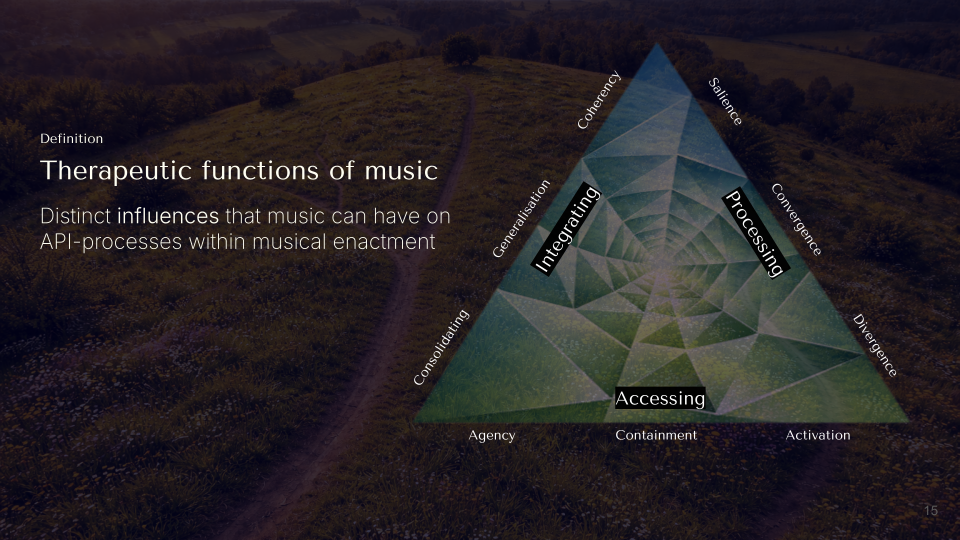
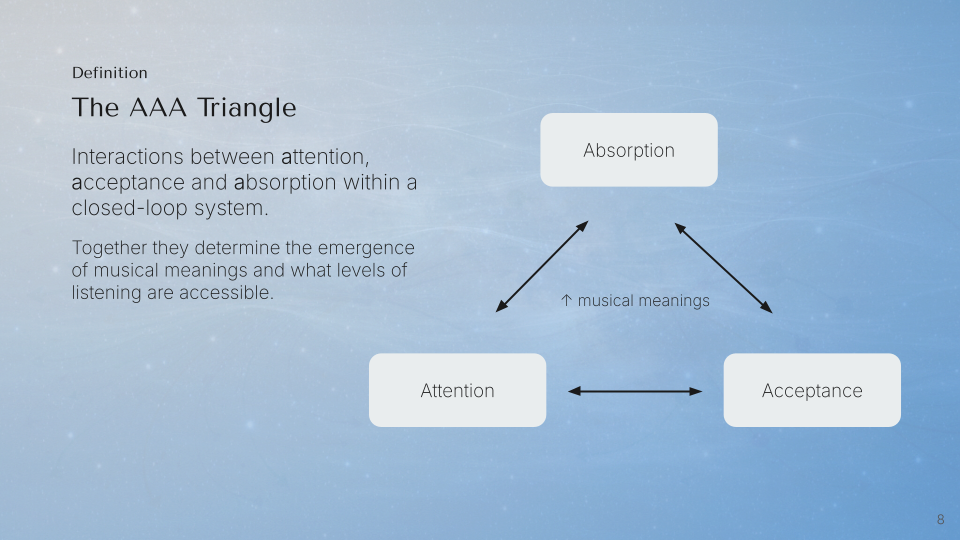
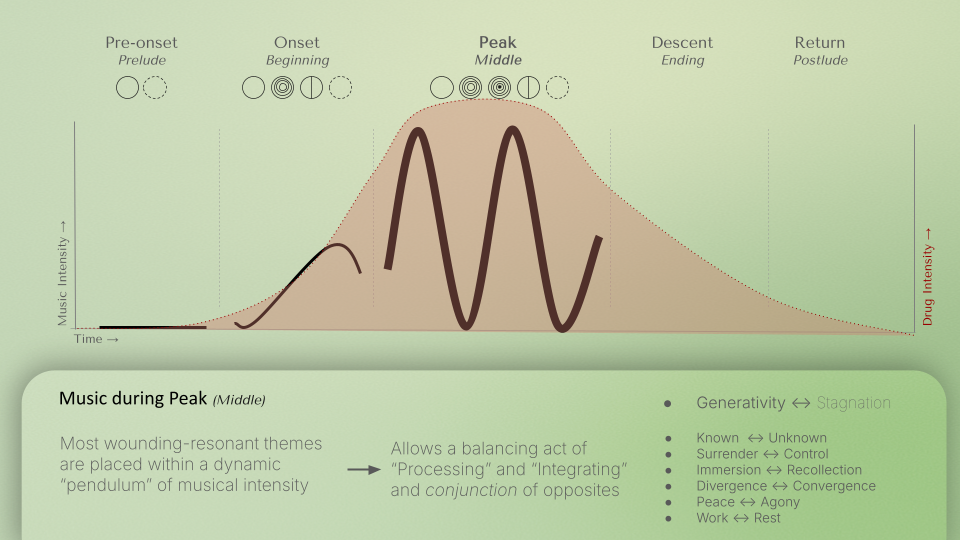
Theory lectures introduce existing and novel concepts gradually, from a foundational understanding of how music actually works, all the way to its therapeutic functions and how to apply them in practice.
.png)
.png)
.png)
.png)
.png)
.png)

.png)
.png)
.png)
.png)
.png)
Nine modules
What we'll cover, module by module
Each module builds on the last, moving from theory, all the way through to the practice of creating. Live sessions run on Wednesdays at 4pm UK time.
01Origins of MusicMar to Apr+
An exploration of where music comes from and why music exists. We start our journey with a remembrance of the ancient and universal roots of music, and of what makes music so significant to us.
- Music as a foundational aspect of human consciousness, a non-verbal language and core mediator of intersubjective experience.
- Have we lost our musical nature, and what would it mean to remember it?
- Why does music exist at all?
- What is music, beyond entertainment?
- A new frame for music as human inheritance and social technology
- A clearer sense of how your relationship with music has evolved over time
Guided listening, reflective exercises, and practices exploring tension, peace, and the musicality of being human.
02The Musical SelfApr to May+
Here we begin our inquiry into the relationship between music, selfhood, attachment, memory, and emotional life. This month explores how listening is shaped by who we are, how we developed, and what we bring into the musical field.
- What is the musical self?
- How does it develop across a lifetime?
- What has shaped my musical preferences and patterns?
- A clearer picture of your own musical personality and an understanding of how to recognise this in others
- A richer vocabulary for describing your relationship to music
Guided listening, personal inquiry, and reflective exercises exploring family, love, motivation, and the mapping of the musical self.
03How Does Music Work?May to Jun+
Music and brains are both characterised by oscillations, by frequencies. In this module we trace the pathways of how sound becomes music, how music becomes meaningful, and how musical structure, perception, and context shape our experience and transform the self.
- How does sound become music?
- How does music become experience?
- What makes an experience supportive, healing, or disruptive?
- What shapes our likes, dislikes, and responses to music?
- A practical model of how musical meaning is constructed
- A deeper sensitivity to the mechanics of musical impact
Guided listening, musical analysis, and practices exploring silence, motion, meaning, confrontation, and the relationship between sound and experience.
04Ways of ListeningJun to Jul+
There are many ways of relating to music. Here we define and experiment with different modes of listening, each highlighting a distinct dimension of music's value to the flourishing of the individual, to the human community and to therapeutic processes.
- In what ways can we listen?
- How do listening styles shape perception, emotion, and meaning?
- What changes when we listen for nuance and detail?
- More range and choice in how you listen
- A clearer sense of what listening mode supports which intention
Listening practices, self-observation, shared reflection, and exercises that deepen awareness of thresholds, space, field, and different listening orientations.
05Dimensions of MusicJul to Aug+
This month we investigate what variables of music give it its unique psychological and experiential character. We recognise how combinations of various musical ingredients give rise to the unique, emergent experiences that make music so special. You'll significantly deepen your musical perception and interpretive sensitivity.
- What gives a piece of music its character, beyond genre and personal preference?
- How do progression types shape what unfolds over time?
- How does music evoke worlds, meanings, and trajectories?
- How do style, form, character, and layers shape experience?
- A clear way to hear and describe key musical dimensions
- A stronger feel for how anchoring, complexity, and progression shape safety, depth, and intensity
- Greater discernment when intentionally choosing music for particular contexts
Layered listening, body-based listening, examples of musical style and form, and practices exploring character, identity, musical meaning, and emotional worlds.
06Therapeutic MusicAug to Sep+
Explore music as an active therapeutic agent within therapeutic processes. By expanding your own musical perceptions, we map out different functions music can serve and learn how they can support the balancing, restoring and growing of the self in unique ways.
- What are music's therapeutic functions?
- When does music help, and when does it get in the way?
- How do we choose music based on purpose, not preference alone?
- A functional map of what music can do in different contexts
- A clearer understanding of subjective response
- More discernment around matching music to intention
- Stronger timing and sensitivity when selecting and shaping music
Frameworks for therapeutic functions, receptive listening practices, case-oriented inquiry, and exploration of healing, familiarity, novelty, and therapeutic fit.
07Therapeutic PlaylistsSep to Oct+
The first month of the Playlist Design Workshop. You bring the previous months' learning into practice and follow the whole journey of creating a playlist, from discovering and organising music to shaping it into a coherent, continuous experience. Live teaching alternates weekly with working-group practice.
- How do we create therapeutic playlists?
- How do we discover, evaluate and organise music so our library stays flexible?
- How do we build musical arcs, from the overall architecture of a session down to phases, sections and transitions?
- How do neighbouring pieces, cadences, fades and mixing shape a continuous experience?
- A repeatable process for building playlists with integrity
- A well-organised library, with shortlists and tags built around therapeutic process and musical function
- Stronger confidence in pacing, flow, sequencing and mixing
Weekly live sessions, working-group practice, music library curation tools, practical mixing lessons with access to mixing software, and a behind-the-curtain look at how Mendel builds his own playlists.
08Therapeutic ClimatesOct to Nov+
The second month of the Playlist Design Workshop turns to everything surrounding the music and the person receiving it. There is no universally therapeutic piece of music. We explore how context, language, setting and relational tone shape how music lands, and how to personalise and adapt a playlist as a session unfolds.
- How do we create therapeutic climates?
- How do setting, context and musical language change how music lands?
- Why does one piece land as soothing for one person and unsettling for another?
- How do we notice misattunement, and adapt to restore it?
- A more complete sense of music as environment, not just content
- Practical ways to anticipate individual and group needs
- Stronger timing and sensitivity when personalising and adapting music
Weekly live sessions, working-group practice, attunement practices, and applied exercises in personalisation, musical language, resonance and adapting a playlist in real time.
09Course SynthesisNov+
This final month focuses on consolidation, integration, and next steps. You'll gather together all the threads of the course, reflect on what has changed, and how you can continue to apply learnings to your own practice and ongoing development.
Teaching summaries, integrative listening, reflective practices, tools and resources, course synthesis, and closure.